
An art station for a child. Housewarming gifts for a sibling in recovery. Hiring a baby-sitter. A picnic in the park to turn around a bad day.
These are some of the experiences that an extra $528 per month in no-strings-attached cash made possible for the 100 Ann Arbor residents who participated in the Guaranteed Income to Grow Ann Arbor (GIG A2) pilot program.
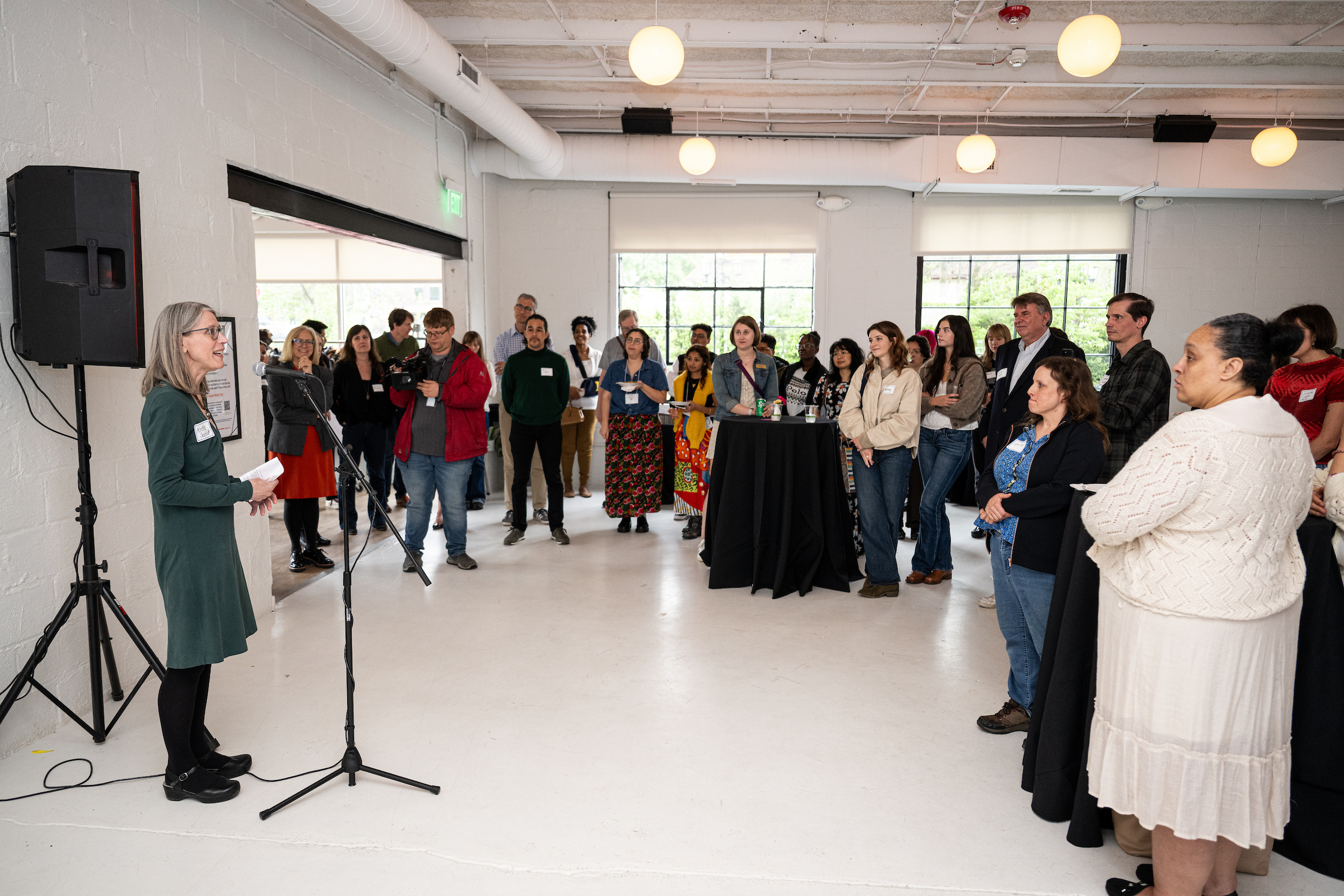
Over two months this winter, six University of Michigan student artists created art pieces that illustrate quotes from GIG A2 participants about what the monthly payments meant to them. The pieces are now part of a No Strings art exhibition curated by Poverty Solutions at the University of Michigan that aims to promote conversation about how guaranteed income is flipping the script on traditional public benefits.
Poverty Solutions’ call for student artists was open to undergraduate and graduate students from any degree program. Based on their artistic portfolio and an interview process, the following students were commissioned to create pieces for No Strings:
- Mia Echlin, BA Law, Justice, and Social Change + Urban Studies ‘28
- Lila Hudgins, BA Art History ‘26
- Emma Ostermeyer, BA Art and Design '26
- Lauren Parker, MPP ‘26
- Mrinaalika Sivakumar, MPP ‘27
- Victoria Sung, MS Information and UX Design ‘27
Ann Arbor native and artist Katie Hammond facilitated three workshops for the students that included guidance on the artistic process, an overview of public benefits policy in the U.S., collaborative brainstorming among the artists to conceptualize their pieces, and group critiques of the near-finished art.

Former Poverty Solutions Student Engagement and Outreach Manager Trevor Bechtel interviewed Ostermeyer and Sung about their experiences contributing to the project. This is an edited version of that interview.
What drew you to the No Strings project?
Sung: I was drawn to this project because I wanted to change the narrative around income support. There is a lot of stigma on providing income support to those in need, even though it reduces poverty and decreases inequality. Although social programs (like income support) benefit everyone, there is a persistent idea in the U.S. that crime, poverty, and not wanting to work is because of a welfare system. And this isn't true – countries such as Finland or Sweden have strong social programs and they are among the happiest countries in the world. I realized that change can't happen only at the policy level. We need to rethink the frames and narratives dominant in our culture to generate change.
Ostermeyer: I've been making art for a long time, but it wasn't until last year that I really appreciated the link between art and social justice issues. I believe that art can play an important role in sharing other's stories, and this project seemed like the perfect way to do that.
What did you learn about your artistic process through this project?
Ostermeyer: I learned to embrace experimenting with different mediums. I normally paint with oils, but for this project, I had a quote about someone making their child an art center at home. So I wanted to emulate the creativity that comes with children making art. I decided to attach physical crayons, colored pencils, and sequins to my painting after it dried. It made me want to experiment more with mixed media.
Sung: I learned that sticking to a goal or an intention helps with knowing when a painting is finished. Painting is a process of discovery, transformation, and emergence. I never quite know where it is heading, much like life. I struggled with when to look at the painting and say "it's done," and I was surprised when the lead artist said it was. But she was right. My goal was to portray the emotional journey of someone getting back on their feet and the growth that comes with it. What's most important is for me to convey that growth is possible. That's how I knew it was complete.
What did you learn about communicating about social issues through art?
Sung: It was definitely a challenge. I doubted whether I should portray something more illustrative and representational rather than abstract. But what kept me grounded was the meaning behind my quote. How feelings like warmth, loss, hope, darkness can be felt and shared with one another. I decided I didn't want to paint a person because then the quote becomes a character in a story rather than an experience. I think social issues like providing cash assistance have difficulty with prejudices and judgment because it comes from a process of viewing and perceiving something you believe is outside yourself. For instance, that person wears different clothes or lives in a different place. To challenge that process of perception, I wanted viewers to instead ask questions and then dialogue with the quote. Hopefully, it becomes more a moment of reflection, contemplation, and realization rather than categorization.
Ostermeyer: I learned that one way to get people to care about an issue is through telling someone's story. I think there is something incredibly vulnerable in sharing your story with others, but art can act as a tool to make this more approachable. Other people might connect with these issues a bit more if it is shown visually to them, and I think that can be very powerful.
How did this project change your perception of guaranteed income?
Ostermeyer: Before this project, the only sort of income assistance programs I was familiar with were programs that had a lot of rules and regulations. This project showed me how important it is to trust that others know the best way to spend their own income. And sometimes that might be through something like creating an at-home art setup for your child. Yes, groceries and other necessities are important. But things like these – making meals for loved ones, enrolling in music lessons, bonding with your child over art – these are all also just as equally important.
Sung: I've been a supporter of guaranteed income since I learned of it during my studies.
But this project in particular has really shown me how much cash assistance can mean to someone. I can see the impact of cash assistance to these individuals in their daily lives. And it goes beyond the cash itself; there's personal growth, reconnecting with loved ones, becoming independent, enjoying time with friends and family. These are experiences you don't necessarily hear about in policymaking. I think it goes to show how policy is meant to be rooted in these human experiences and to build systems that cultivate them.
View the No Strings exhibition at NoStringsGuaranteedIncome.org.