
» Guaranteed Income to Grow Ann Arbor Skip to main content
U-M Poverty Solutions Logo U-M Poverty Solutions Logo

Projects

Guaranteed Income to Grow Ann Arbor

Guaranteed Income to Grow Ann Arbor (GIG A2) was a two-year pilot that provided monthly payments of $528 to 100 Ann Arbor entrepreneurs and gig workers with low incomes, from January 2024 through December 2025. Another 100 people from the eligible applicant pool participated in a randomized controlled trial, without receiving the monthly payments.

Led by Principal Investigator Kristin Seefeldt with co-PIs William Lopez and Rebeccah Sokol, the study of GIG A2 assessed how people spent the monthly payments as well as how the cash affected their entrepreneurial activities and various dimensions of health and well-being.

More about the Pilot Program

Entrepreneurs, small business owners, and others selling their own goods and services play an essential role in supporting the local economy and strengthening our community. GIG A2 recognized and built on those strengths.

The City of Ann Arbor decided to dedicate $1.6 million of its ARPA money to a guaranteed income pilot in response to resident feedback about how the one-time funding should be spent. The City contracted Poverty Solutions at the University of Michigan to design, operate, and evaluate the pilot program, which is unique among guaranteed income programs in its focus on gig workers and entrepreneurs.

The Ann Arbor Area Community Foundation also contributed funds to GIG A2. Steady administered the monthly payments. Numerous community organizations including Ann Arbor District Library, Entrepreneurship Center at Washtenaw Community College, Express Your Yes Foundation, Friends in Deed, and Groundcover News advised on the pilot program.

Get to Know the GIG A2 Participants

To be eligible to participate in GIG A2, people had to:

  • be Ann Arbor residents,
  • have a household income of 225% of the Federal Poverty Line or less, and
  • be engaged in gig work or entrepreneural efforts – broadly defined.

From the eligible applicant pool, 200 people were randomly selected to participate in GIG A2; 100 people received the monthly guaranteed income payments, and 100 received modest stipends for participating in the research study without receiving the guaranteed income. 

The Research

The study of GIG A2 uses a Randomized Control Trial (RCT), which is considered the gold standard in study design. In an RCT:

  • Selection is random. No one person or group gets an advantage over another, ensuring fairness in who receives the guaranteed income.
  • Because people are randomly assigned to receive guaranteed income or not, we can be certain that any differences we see between those who receive the payment and those who do not is due to the payment.

The study is based on a series of surveys and in-depth interviews; participants were paid $50 each time they completed a research activity. All GIG A2 participants were asked to complete a baseline survey when they joined the pilot program, a survey one year into the two-year pilot, and a survey at the end of the pilot. The surveys asked about a number of different topics, including how people used the guaranteed income money; their ability to afford food, housing, and child care; and their health and well-being.

A select group of participants were also invited to participate in interviews with the researchers in order to gain more nuanced insights into their experiences.

FAQs for GIG A2 & Research Study Participants

While the GIG A2 pilot program ended in December 2025, GIG A2 participants may still have questions related to their involvement in the program.

View a printable PDF with answers to common questions about the pilot program, for guaranteed income recipients, for research study participants, the research study in general, and community resources. Consulte las respuestas a las preguntas más frecuentes en español.

If you still have questions, contact annarborguaranteedincome@umich.edu.

Key Findings

Evaluation of GIG A2 is ongoing, and a final report will be published later in 2026.

Key findings from the Year 1 report, released in January 2026, include:

  • Food, household supplies, and housing were the most common uses of the guaranteed income payments.
  • There were no statistically significant differences in experiences of food, housing, and utility security between the groups who did and did not receive the extra $528 a month.
  • GIG A2 participants receiving the monthly payments reported feeling a sense of relief and reduced stress thanks to the extra money. Some people said the guaranteed income said the financial cushion was beneficial to their entrepreneurial efforts. Some said the flexible cash allowed them to provide experiences and resources for their children that they otherwise would not have been able to afford.

Key findings from the baseline report, released in October 2024, include:

  • Paying bills, saving money, and reducing stress were the top needs and priorities identified by GIG A2 participants.
  • Research on entrepreneurial efforts in the U.S. by individuals with lower incomes finds that micro-businesses are more likely to be led by younger people, women, and people of color compared to the overall population of small business owners. The demographics of GIG A2 participants reflect the national trend.

Journal article

Seefeldt, K.; Aumentado, L.; Chen, Y.; Schau, D.; Shupp Parker, E.; Lopez, W.; & Sokol, R. (2026). Are We the Welfare Office? Managing Administrative Burden in a Guaranteed-Income Pilot. Social Service Review. Retrieved from https://www.journals.uchicago.edu/doi/full/10.1086/739424

Community Engagement

Groundcover News cover

Sharing the stories of GIG A2 participants

Groundcover News published a special gig economy issue in May 2025. The special issue included columns by GIG A2 participants on their experiences with the pilot program, interviews with the Principal Investigators, and a joint editorial from Groundcover and GIG A2 on the importance of gig workers in sustaining Ann Arbor’s economy. Groundcover vendors, who are themselves gig workers impacted by poverty, sold the special issue throughout the month.

Read a digital version of the special issue
Wide view of a community conversation on Guaranteed Income to Grow Ann Arbor, held May 8, 2025 at the downtown Ann Arbor library, showing attendees seated throughout the room.

Community conversation on gig work in Ann Arbor

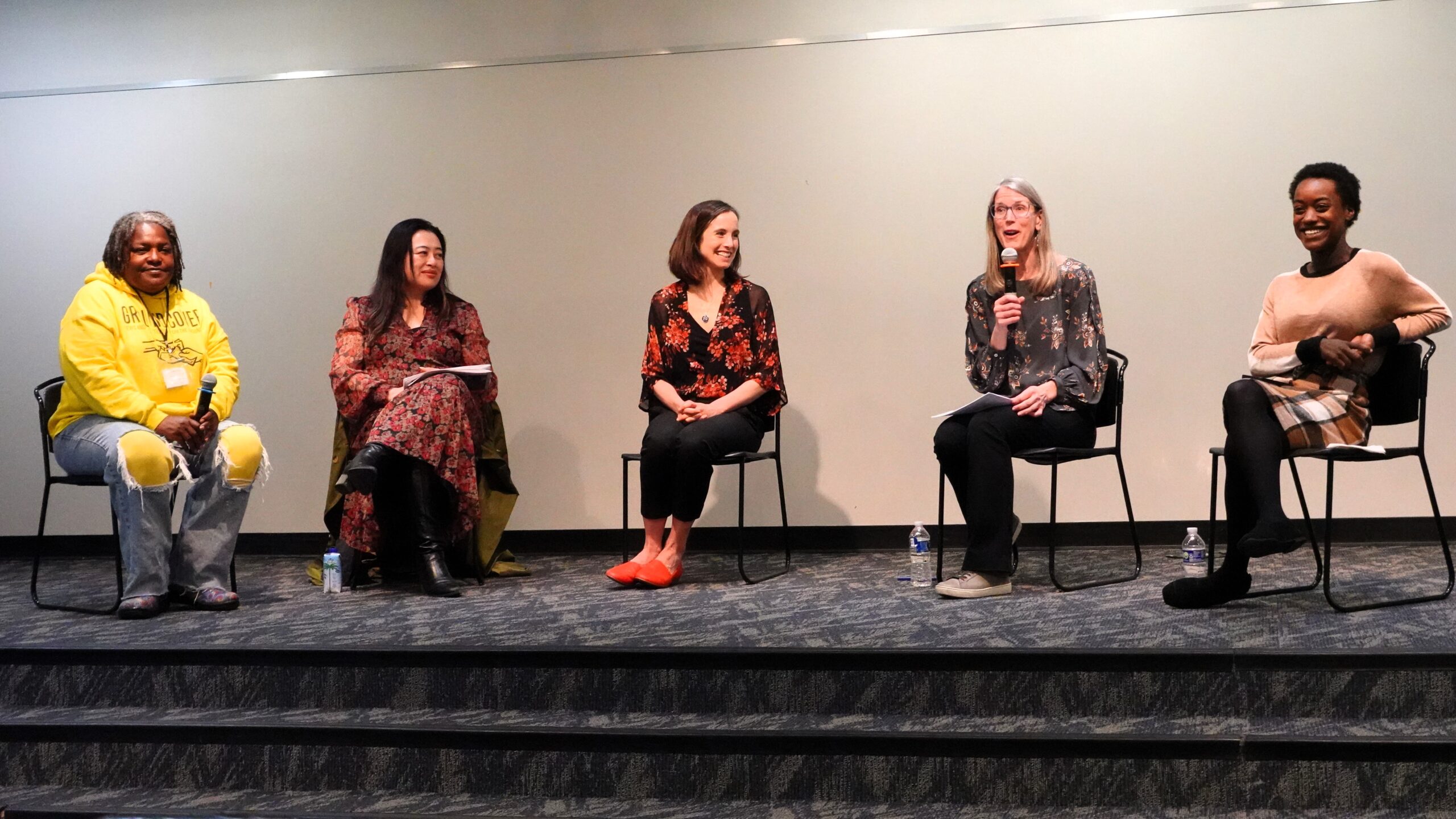
On May 8, 2025, about 25 community members gathered at the downtown Ann Arbor District Library to hear firsthand how guaranteed income is supporting local entrepreneurs and gig workers. Hosted by Poverty Solutions at U-M and Groundcover News, the event spotlighted GIG A2 and featured a panel of gig workers, city leaders, and researchers discussing the role of cash assistance in supporting financial stability, business growth, and community well-being.

See an event recap

Related Stories

Video

Transcript

[Rebeccah Sokol] Guaranteed income is a cash transfer program that provides regular, unrestricted, and unconditional funds to individuals or households.

[William Lopez] Guaranteed income is not only a research study or project; it’s looking at how we can address poverty.

[Kristin Seefeldt] This isn’t a new idea. And in fact, this is something that Martin Luther King Jr. wanted to have put in place as a way to address racial disparities in income in this country.

[Sokol] Guaranteed Income to Grow Ann Arbor is a guaranteed income program that is focused on entrepreneurs in Ann Arbor who qualify as low-income earners.

[Lopez] Folks who apply and are approved to be in the project are guaranteed to get a certain amount of money to be able to use as they see fit.

[Sokol] There are no work or education requirements to receive the funds.

[Seefeldt] One of the things we’re interested in is whether this infusion of cash will help people who want to grow their businesses do that. Will it help them stabilize their businesses? Alternatively, there might be some folks for whom the work that they’re doing, you know, they’re doing out of economic necessity, and maybe an extra $528 a month gives them the ability to scale that back.

[Lopez] We’re thinking of businesses broadly in this case. We’re thinking both of traditional formal businesses, but also an informal businesses that you see in the city and around the state. These include things like shoveling snow, or doing yard work, or caring informally for people’s children.

[Sokol] Too often, individuals experience social risk factors such as food insecurity, housing instability, and so forth. And the experience of these factors really prohibits them from realizing their full potential or participating in a way that they want to.

[Lopez] Many of the factors that influence our health are tied to our income, are tied to poverty. And guaranteed income is one way to address poverty in people’s lives. Folks are able to put that money toward things they know impact their health and the health of their families. This includes things like buying food, buying medication, or paying for transportation, or paying for child care. All of these things ultimately impact morbidity and mortality, or how healthy we are and how long we live in our communities.

[Seefeldt] Applications open on October 2nd, (2023). They’ll close at 11:59 p.m. on October 13th. All the information, hopefully, that people would need will be on the website, and that’s where the applications themselves will be.