
Lessons from Detroit's ShotStoppers Community Violence Intervention Program
The City of Detroit partnered with Poverty Solutions at the University of Michigan to evaluate the first two years of the ShotStoppers program. Our evaluation drew on public safety data, administrative records, interviews, focus groups, and surveys to measure changes in violence and perceptions of public safety across the city and within the Community Violence Intervention zones and to identify key factors in program implementation.
Key findings
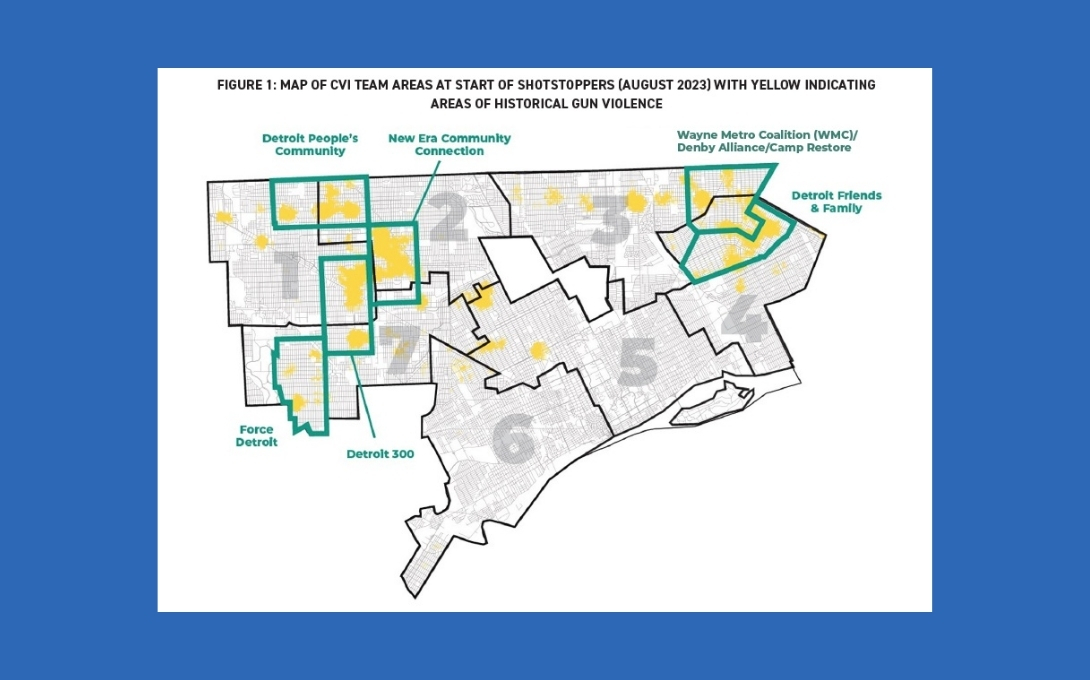
- The CVI zones assigned to each team experienced decreases in homicides and non-fatal shootings from 2023 to 2025, with some areas outpacing the parts of the city not covered by the program.
- CVI teams used two distinct strategies: 1) individual interventions with individuals and groups at high risk of involvement with gun violence and 2) broader community engagement with resource provision.
- CVI teams depended heavily on the trust and credibility they developed with individuals at high risk of gun violence and with their broader zone communities.
- The City fostered these CVI team-level relationships of trust and credibility with its financial and administrative support coupled with a high degree of autonomy for the teams to adapt their programming to the on-the-ground conditions of their zones and neighborhoods.
>> Read the full evaluation report