
» Elisabeth Gerber Skip to main content
U-M Poverty Solutions Logo U-M Poverty Solutions Logo

Faculty

Back to experts

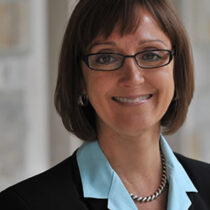
Elisabeth Gerber

Jack L. Walker Jr. Collegiate Professor of Public Policy, Gerald R. Ford School of Public Policy; Professor of Political Science (by courtesy), and Research Associate at the Center for Political Studies

Elisabeth Gerber’s poverty-related research focuses on urban, regional and metropolitan policy especially in the areas of: transportation and water policy; climate adaptation; and community, workforce, and economic development. Gerber is co-PI of the Detroit Metropolitan Area Communities Study. She is the author of The Populist Paradox: Interest Group Influence and the Promise of Direct Legislation (1999), co-author of Stealing the Initiative: How State Government Responds to Direct Democracy (2000), and co-editor of Voting at the Political Fault Line: California’s Experiment with the Blanket Primary (2001) and Michigan at the Millennium (2003). Recent publications include “Motivational Crowding in Sustainable Development Interventions” with Arun Agrawal and Ashwini Chhatre (APSR 2015, 109(3): 470-487) and “Spatial Dynamics of Vertical and Horizontal Intergovernmental Collaboration” with Carolyn Loh (JUA 2015, 37(3): 270-288). Gerber was elected to the American Academy of Arts and Sciences in 2012 and currently serves as vice-chair of the Regional Transit Authority of Southeast Michigan.

PhD, University of Michigan; MA, University of Michigan; BA, University of Michigan

Projects

Detroit Partnership on Economic Mobility

The Partnership on Economic Mobility between Poverty Solutions and the City of Detroit is a joint effort to identify and implement concrete, evidence-based strategies that significantly improve economic opportunity and reduce poverty in Detroit.

Read more
Detroit Metro Area Communities Study

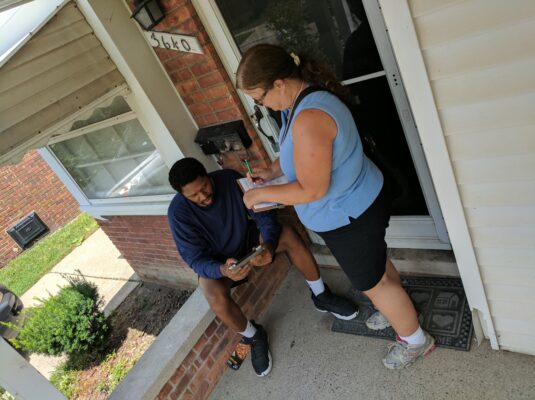
The Detroit Metro Area Communities Study is a University of Michigan initiative designed to regularly survey a broad, representative group of Detroit residents about their communities, including their experiences, perceptions, priorities, and aspirations.

Read more